Who we are
Crosstalk Connections is a nonprofit working to make daily human connection reachable for the people who need it most.
We are a registered 501(c)(3) organization, EIN 99-4453862. We connect people in addiction recovery and people experiencing loneliness with supportive peers, one-on-one and in group calls, every day. The service is free to the people who use it, and it's built to be easy to join; you can take part by phone, with video available as an option but never required.
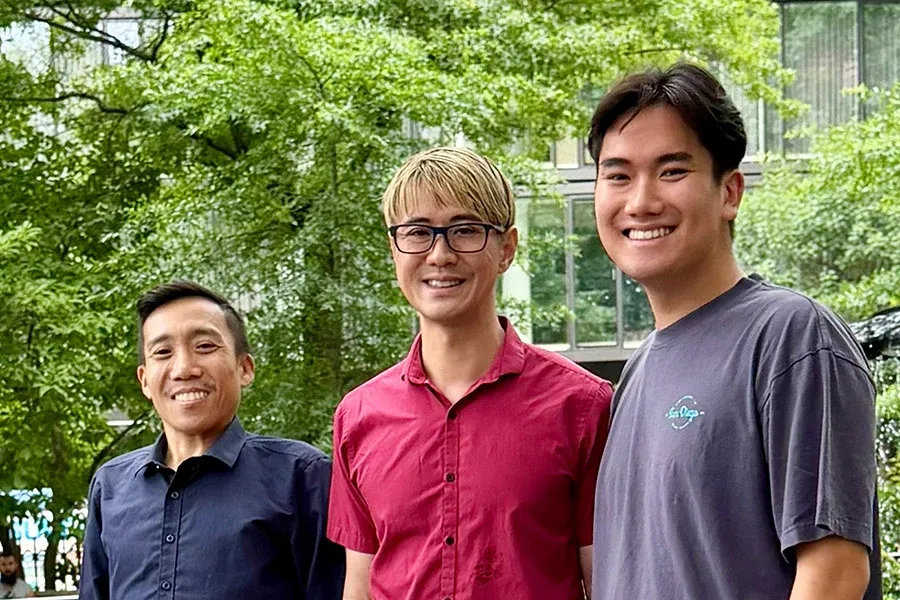
Crosstalk was created for and by the people it serves. Its founder, Chris C., is in recovery and has been through rehab, along with years of AA and other recovery groups. Crosstalk exists because of that experience, and it shapes every design decision we make.
Designed from lived experience
Most of Crosstalk's design traces back to a specific moment someone here lived through. That is what "created for and by people in recovery" means in practice:
- Calls that went unanswered felt like rejection. So Crosstalk only connects people who both answered. Nobody dials into a void, and nobody's silence gets taken personally.
- The kindest sponsor check-in could still land as shame. So nothing about Crosstalk interrogates you. Missing a call costs nothing and is nobody's business, and if you want your sponsor in the loop, a weekly participation note to a trusted contact you choose shows them you're putting in the work, so they don't have to ask and you don't have to report.
- Sharing a phone number with a stranger is a real barrier. So calls are bridged: you go by the name or nickname you choose, numbers are never shown, and staying in touch is a choice both people make.
- Answering into silence would be the cruelest outcome. So someone is always on call as a backup, and if a conversation falls through, the system works to reconnect the person still on the line.
Our mission and vision
Our mission is to combat the epidemic of loneliness and isolation by making real conversations with supportive peers reachable every day. Our initial focus is addiction recovery, where daily peer connection is one of the best-evidenced supports there is, and older adults living alone, for whom a whole day can pass without a single real conversation.
Our vision is to take the fear out of reaching out, so more people can build and keep the connections that protect against addiction, anxiety, depression, and the physical illness that often follows. Behind all of it is a simple conviction: nobody should lose their people to logistics, and nobody should go quiet unnoticed.
Why we exist
Connection is one of the strongest protections we have for our health, and for many people, one of the hardest things to keep up day after day. Recovery programs recommend calling a peer daily. People living alone can go many days without a single real conversation. In both cases, the thing that breaks down is rarely the willingness to connect. It is the small, repeated act of making the call and reaching out.
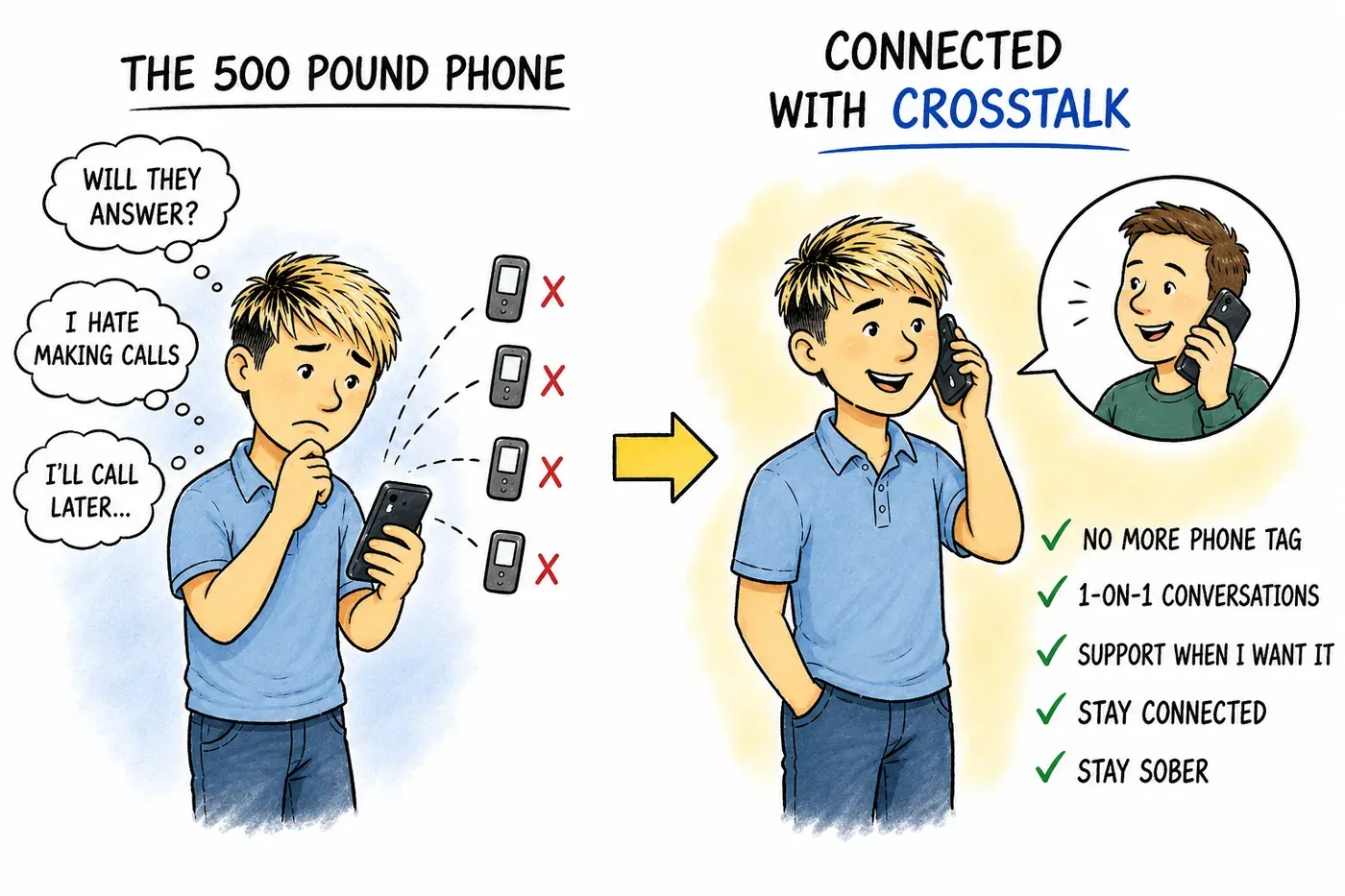
Crosstalk was built to remove that barrier. Instead of asking a person to make the call, our system places the call for them at a time they choose, and connects them with a peer, one-on-one or together with their whole group. The step that stops so many people is taken care of, so the conversation actually happens.
Crosstalk's Origins
I'm Chris C., the inventor of Crosstalk Connections. Crosstalk was born out of my own struggle in addiction recovery.
"I built Crosstalk because I know what it's like to need to make that call and not be able to."
After inpatient rehab, I did what my counselor recommended and joined Alcoholics Anonymous. I expected the group meetings and getting a sponsor. I didn't expect the homework: call another alcoholic or addict every single day.
I really struggled with those calls. Most of the time, people didn't answer, and it was hard not to take that a little personally. So I procrastinated. Eventually I stopped trying, and I felt the shame of it every time my sponsor checked in. It turned out I wasn't alone. AA even has a name for it: the "500-pound phone."
And yet when I actually spoke with someone, it really helped. I dread speaking up in group meetings (I hate public speaking), but I'm fine talking one-on-one. The hard part was always making the call. As a tech nerd, I kept thinking: why can't the computer make the call for me and just connect me to someone? That's when the idea for Crosstalk was born.
The name was inspired by the term crosstalk in AA. If you respond to or give advice to someone during a meeting, the leader will scold you: "No crosstalk!" It felt fitting: crosstalk is off-limits during the meeting, but Crosstalk is built for exactly those one-on-one conversations afterward.
I created a nonprofit because I want Crosstalk to be free for the people it can help. And I believe Crosstalk can go further than addiction recovery. I'm hopeful Crosstalk can help take on the Epidemic of Loneliness and Isolation, especially for isolated seniors, something close to me because my own mom has lived alone for three decades.
What we do
We operate a peer-connection service for two communities:
- People in addiction recovery. A daily peer call is a cornerstone of many recovery programs. Crosstalk makes those calls happen seamlessly, so the daily habit is easier to keep. Recovery groups and treatment-program cohorts can also get their own circle, with group video calls the system convenes and one-on-one pairings in between, so the people who started recovery together stay connected. Read more on our Recovery page.
- People experiencing loneliness and isolation. For anyone who can go days without a real conversation, Crosstalk brings a familiar daily voice within reach. Read more on our Loneliness page.
The service is free for the people who use it.
How we started
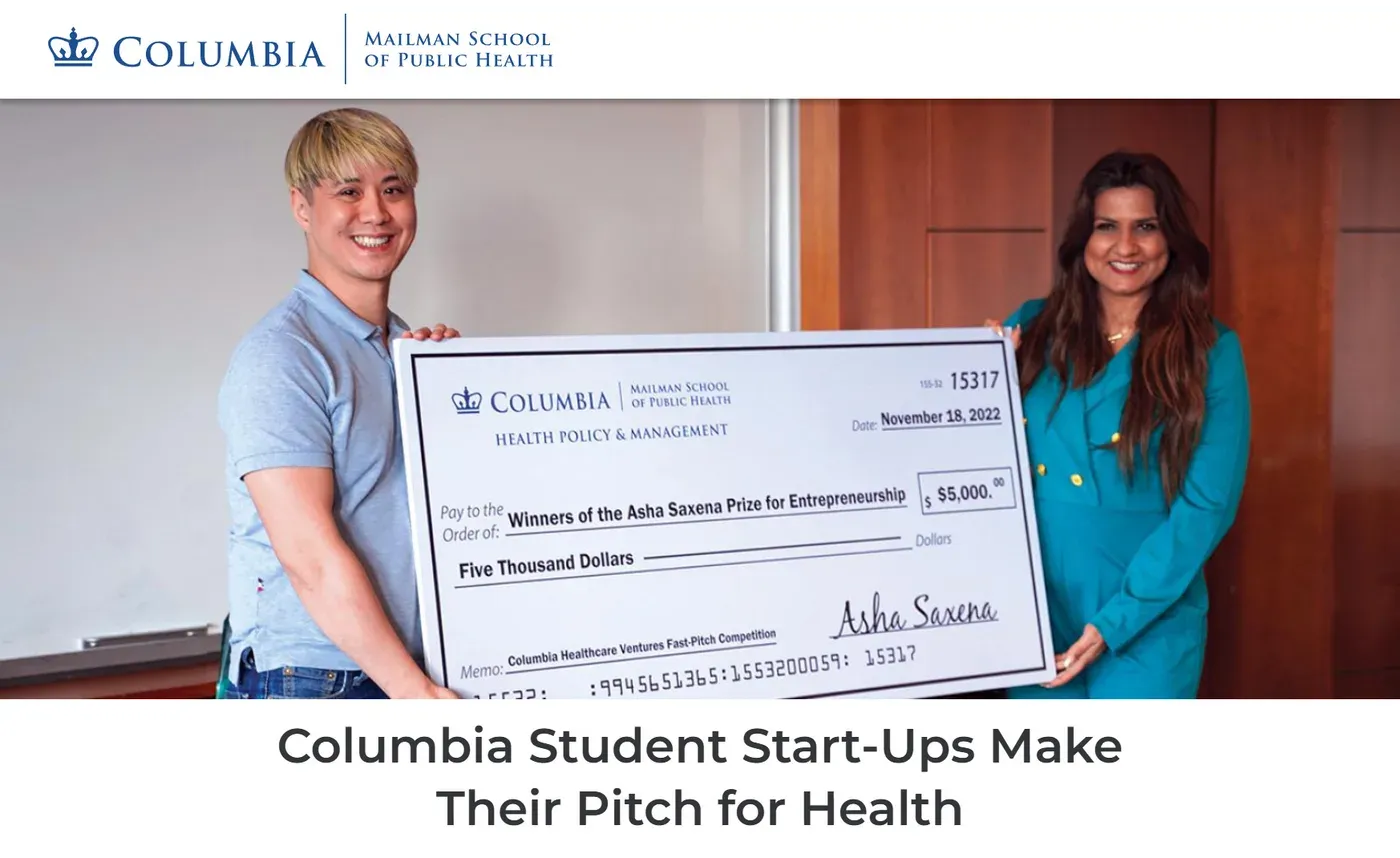
The idea arrived at the end of 2021, in the middle of the struggle described above: have the technology make the call, rather than asking a person in a vulnerable moment to make it themselves. It turned serious a year later, when Crosstalk won Columbia University's healthcare venture pitch competition out of ten teams selected from seven schools (our founder is still proud, and a little surprised). In 2024 we formed the nonprofit, Crosstalk Connections, Inc., so the service could stay free for the people who need it, and that October Crosstalk joined the Columbia Startup Lab, the university's home for alumni-founded ventures, where we are still members today. Along the way the core calling mechanism became a working platform, patented in 2026, purpose-built for peer connection.
What we believe
- Connection is the medicine. Daily connection with peers is one of the most effective things we know of for recovery and for loneliness. The problem was never that it doesn't work; it's that for so many people, the call doesn't get made. So we don't ask you to make it. At a time you choose, Crosstalk places the call, so the connection that already works actually happens.
- Peers help peers. The most sustaining support often comes from someone who has been there. Our role is to make that pairing happen reliably. And every answered call runs both ways: answering is an act of service to the person on the other end.
- Free means free. The people who use Crosstalk don't pay. We keep the service running through donations and partnerships.
- Privacy matters. Unlike an ordinary phone call, the peer you talk to never sees or keeps your phone number; calls are bridged so neither person sees the other's number unless you choose to share it. We don't record conversations, and we don't sell your information.
- Never shame, never surveillance. Crosstalk does not score attendance or report missed calls. Your individual activity is not reported to treatment facilities or staff. If you want someone in your corner to see that you're participating, you can name a trusted contact. That choice is yours, and yours to change.
Get in touch
Whether you'd like to use Crosstalk, bring it to a group or program, or support the work, we'd like to hear from you.